Middlefield (860) 349-8500
Wallingford (203) 294-4977

Blog

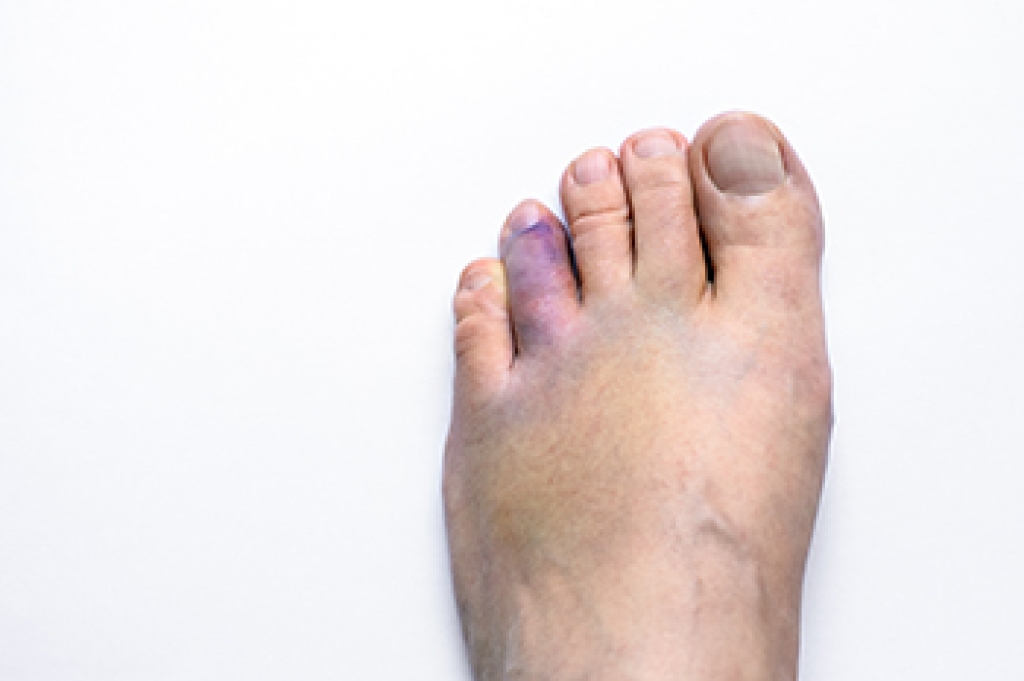
What Happens When You Break a Toe?

A broken toe, also called a toe fracture, can happen after a direct injury to the foot. Dropping a heavy object on the toes or striking a toe against furniture or other hard object can cause a break. Symptoms include pain, swelling, and bruising around the injured toe. Walking can also become uncomfortable, especially when pressure is placed on the front of the foot. A broken lesser toe, meaning any toe other than the big toe, usually heals without surgery. However, proper evaluation is important to determine the position and severity of the fracture.

Most lesser-toe fractures heal in about six weeks, although discomfort can continue longer in some patients. Swelling can also remain after the bone has healed. Patients can usually place weight on the injured foot as comfort allows. Shoes with a firm sole can provide support and protect the toe when walking. Some fractures can cause the toe to look crooked or out of position. A podiatrist can determine whether the toe needs to be realigned. Continued pain, significant changes in toe position, or difficulty returning to normal activities can indicate that further evaluation is necessary.

A podiatrist can examine the injured toe and determine how the fracture is affecting foot function. The evaluation can include checking alignment, swelling, and tenderness around the injury. A podiatrist can recommend appropriate support to protect the toe while the bone heals. Treatment can also address changes in walking that develop because of pain. In some cases, imaging can help show the location and extent of the fracture. More complex fractures can require additional treatment, especially when the toe is badly displaced. If you have broken your toe, it is suggested that you schedule an appointment with a podiatrist for effective relief and treatment solutions.

Broken toes may cause a lot of pain and should be treated as soon as possible. If you have any concerns about your feet, contact Dr. Gordon Fosdick from Affiliated Foot Care Center. Our doctor will treat your foot and ankle needs.

What Is a Broken Toe?

A broken toe occurs when one or more of the toe bones of the foot are broken after an injury. Injuries such as stubbing your toe or dropping a heavy object on it may cause a toe fracture.

Symptoms of a Broken Toe

  • Swelling
  • Pain (with/without wearing shoes)
  • Stiffness
  • Nail Injury

Although the injured toe should be monitored daily, it is especially important to have a podiatrist look at your toe if you have severe symptoms. Some of these symptoms include worsening or new pain that is not relieved with medication, sores, redness, or open wounds near the toe.

If you have any questions please feel free to contact our offices located in Middlefield and Wallingford, CT . We offer the newest diagnostic tools and technology to treat your foot and ankle needs.


Read more about What to Know About a Broken Toe

Achilles Tendon Enthesopathy and Heel Pain

Achilles tendon enthesopathy affects the area where the Achilles tendon attaches to the back of the heel bone. The attachment point is called the enthesis, and repeated stress or inflammation in this area can cause pain and tenderness. Unlike pain located in the middle portion of the Achilles tendon, enthesopathy usually causes discomfort close to the heel attachment. Symptoms may include pain at the back of the heel, stiffness after periods of rest, and tenderness when touched. Some people may also notice swelling or thickening surrounding the tendon attachment.

Several factors can contribute to Achilles tendon enthesopathy. Repetitive activities such as running, jumping, and sports can place repeated stress on the tendon. Tight calf muscles may increase tension through the Achilles tendon, while changes in foot mechanics can affect how forces travel through the ankle and heel. Risk factors include increasing activity too quickly, being physically active without adequate recovery, and wearing unsupportive footwear. Age can also influence tendon health because tendons may become less flexible and slower to recover.


A podiatrist can evaluate Achilles tendon pain by reviewing activity levels, previous injuries, and symptom patterns. Imaging may be recommended when symptoms are persistent or when another injury needs to be ruled out. Treatment depends on the cause and severity. A podiatrist may recommend temporary activity modification, strengthening exercises, or custom orthotics when abnormal foot mechanics contribute to stress on the Achilles tendon.


Ignoring persistent Achilles pain can allow irritation to continue and may make everyday activities more difficult. Treatment should focus on reducing excessive stress while gradually restoring strength and flexibility. A podiatrist can help establish a recovery plan that supports a safe return to walking, exercise, and sports. If you have pain in your Achilles tendon, it is suggested that you consult a podiatrist who can accurately diagnose and treat Achilles tendon injuries.

Achilles tendon injuries need immediate attention to avoid future complications. If you have any concerns, contact Dr. Gordon Fosdick of Affiliated Foot Care Center. Our doctor can provide the care you need to keep you pain-free and on your feet.

What Is the Achilles Tendon?

The Achilles tendon is a tendon that connects the lower leg muscles and calf to the heel of the foot. It is the strongest tendon in the human body and is essential for making movement possible. Because this tendon is such an integral part of the body, any injuries to it can create immense difficulties and should immediately be presented to a doctor.

What Are the Symptoms of an Achilles Tendon Injury?

There are various types of injuries that can affect the Achilles tendon. The two most common injuries are Achilles tendinitis and ruptures of the tendon.

Achilles Tendinitis Symptoms

  • Inflammation
  • Dull to severe pain
  • Increased blood flow to the tendon
  • Thickening of the tendon

Rupture Symptoms

  • Extreme pain and swelling in the foot
  • Total immobility

Treatment and Prevention

Achilles tendon injuries are diagnosed by a thorough physical evaluation, which can include an MRI. Treatment involves rest, physical therapy, and in some cases, surgery. However, various preventative measures can be taken to avoid these injuries, such as:

  • Thorough stretching of the tendon before and after exercise
  • Strengthening exercises like calf raises, squats, leg curls, leg extensions, leg raises, lunges, and leg presses

If you have any questions please feel free to contact our offices located in Middlefield and Wallingford, CT . We offer the newest diagnostic tools and technology to treat your foot and ankle needs.

Read more about The Causes, Types, and Treatments of Achilles Tendon Injuries

When Yoga Leads to Foot and Ankle Injuries

Yoga is often viewed as a low impact form of exercise, but foot and ankle injuries can still occur during practice. Although these injuries are not especially common, certain poses may place stress on the joints, tendons, ligaments, and muscles in the lower extremities. Balance positions, repeated stretching, and movements that force the foot into extreme angles may lead to strains, sprains, tendon irritation, or joint pain. Some people notice swelling, stiffness, instability, or discomfort that develops gradually after repeated practice sessions. Others may experience sudden pain from losing balance or placing too much pressure on the foot or ankle during a pose. Individuals with previous injuries or poor joint stability may face a greater risk of developing problems over time. A podiatrist can evaluate movement patterns, identify structural issues, and recommend treatment to reduce pain and prevent further injury. If foot or ankle pain continues after yoga activity, it is suggested that you visit a podiatrist for a diagnosis and appropriate treatment.

Ankle and foot injuries are common among athletes and in many sports. They can be caused by several problems and may be potentially serious. If you are feeling pain or think you were injured in a sporting event or when exercising, consult with Dr. Gordon Fosdick from Affiliated Foot Care Center. Our doctor will assess your condition and provide you with quality foot and ankle treatment.

Common Injuries

The most common injuries that occur in sporting activities include:

  • Achilles Tendonitis
  • Achilles Tendon Rupture
  • Ankle Sprains
  • Broken Foot
  • Plantar Fasciitis
  • Stress Fractures
  • Turf Toe

Symptoms

Symptoms vary depending upon the injury and in some cases, there may be no symptoms at all. However, in most cases, some form of symptom is experienced. Pain, aching, burning, bruising, tenderness, tightness or stiffness, sensation loss, difficulty moving, and swelling are the most common symptoms.

Treatment

Just as symptoms vary depending upon the injury, so do treatment options. A common treatment method is known as the RICE method. This method involves rest, applying ice, compression and elevating the afflicted foot or ankle. If the injury appears to be more serious, surgery might be required, such as arthroscopic or reconstructive surgery. Lastly, rehabilitation or therapy might be needed to gain full functionality in the afflicted area. Any discomfort experienced by an athlete must be evaluated by a licensed, reputable medical professional.  

If you have any questions please contact our offices located in Middlefield and Wallingford, CT . We offer the newest diagnostic and treatment technologies for all your foot and ankle needs.

Read more about Sports Related Foot And Ankle Injuries

Understanding Athlete’s Foot and How It Spreads

Athlete’s foot is a fungal infection that affects the skin of the feet. Despite its name, a person does not have to be an athlete to develop it. The fungus grows well in warm, damp places and can spread through contact with contaminated surfaces. Risk factors include walking barefoot in locker rooms, showers, or swimming-pool areas. Sharing socks or towels with an infected person can also spread the fungus. Tight-fitting, closed-toe shoes and sweaty feet can create conditions that allow the infection to grow. Symptoms include itching, stinging, and burning between the toes or on the soles.

The skin affected by athlete’s foot can crack, peel, or develop itchy blisters. The infection can also spread beyond the original area. Touching or scratching infected skin can transfer the fungus to the hands. The fungus can spread to the toenails, where the infection can become harder to treat. Because several skin problems can look similar, an accurate diagnosis is important before treatment begins. A podiatrist can examine the skin closely and determine whether the symptoms are caused by athlete’s foot or another foot condition.

A podiatrist can recommend treatment based on the location and severity of the infection. Treatment includes antifungal products that target the fungus and help clear the affected skin. More severe infections can require stronger antifungal medication. A podiatrist can also check for toenail involvement and other complications that could make treatment more difficult. Patients with diabetes or circulation problems can benefit from prompt evaluation because foot infections can create added concerns. Athlete’s foot that persists or keeps returning deserves professional attention. Proper diagnosis helps ensure that treatment targets the actual cause of the symptoms. If you have symptoms of athlete’s foot, it is suggested that you schedule an appointment with a podiatrist for a diagnosis and appropriate treatment.

Athlete’s foot is an inconvenient condition that can be easily reduced with the proper treatment. If you have any concerns about your feet and ankles, contact Dr. Gordon Fosdick from Affiliated Foot Care Center.  Our doctor will treat your foot and ankle needs.

Athlete’s Foot: The Sole Story

Athlete's foot, also known as tinea pedis, can be an extremely contagious foot infection. It is commonly contracted in public changing areas and bathrooms, dormitory style living quarters, around locker rooms and public swimming pools, or anywhere your feet often come into contact with other people.

Solutions to Combat Athlete’s Foot

  • Hydrate your feet by using lotion
  • Exfoliate
  • Buff off nails
  • Use of anti-fungal products
  • Examine your feet and visit your doctor if any suspicious blisters or cuts develop

Athlete’s foot can cause many irritating symptoms such as dry and flaking skin, itching, and redness. Some more severe symptoms can include bleeding and cracked skin, intense itching and burning, and even pain when walking. In the worst cases, Athlete’s foot can cause blistering as well. Speak to your podiatrist for a better understanding of the different causes of Athlete’s foot, as well as help in determining which treatment options are best for you.

If you have any questions please feel free to contact our offices located in Middlefield and Wallingford, CT . We offer the newest diagnostic and treatment technologies for all your foot and ankle needs.

Read more about How to Deal with Athlete's Foot

Reminder: When Was the Last Time...?

Custom orthotics, or shoe inserts, should be periodically replaced. Orthotics must fit properly to give you the best results. Protect your feet and ankles!

Connect with us